Federal Republic of Nigeria

One Humanitarian One Poverty Response System (OHOPRS)

About OHOPRS

One National Architecture for Humanitarian Response and Poverty Reduction

The One Humanitarian One Poverty Response System (OHOPRS) is Nigeria's integrated national architecture for coordinating humanitarian response, social protection and poverty reduction through one connected system of governance, data, financing, delivery and accountability.

It is designed to move Nigeria from fragmented interventions and temporary relief toward coordinated, measurable and sustainable pathways out of poverty.

What is OHOPRS?

More than a programme. A national operating architecture.

OHOPRS is not intended to function as another stand-alone intervention competing with existing programmes. It provides the national coordination framework through which humanitarian assistance, social protection, poverty-reduction programmes, data systems, financing and accountability mechanisms can work together as one response.

  1. Governance

    Coordinated institutions, roles and accountability.

  2. Data & Intelligence

    Integrated registries, targeting, monitoring and evidence.

  3. Service Delivery

    Connected interventions responding to household and community needs.

  4. Financing

    Transparent and coordinated resource mobilisation and tracking.

  5. Accountability & Learning

    Monitoring outcomes, performance, feedback and continuous improvement.

Why OHOPRS?

Nigeria needed a system, not another layer of fragmentation.

Nigeria's humanitarian and poverty-response landscape contains numerous institutions, interventions, registries, funding streams and delivery structures.

When these operate independently, households may receive overlapping support while others remain invisible; programmes may measure activities instead of outcomes; and emergency assistance may fail to connect people to long-term resilience.

OHOPRS responds by creating one coordinating architecture that connects institutions, data, delivery and accountability across Federal, State and Local Government levels.

Its central purpose is to ensure that support is not only delivered, but coordinated, tracked and connected to measurable progress.
Fragmented Interventions

One Coordinated National Response

Disconnected Data

One Integrated Intelligence Architecture

Temporary Assistance

Structured Pathways to Resilience

Activity-Based Reporting

Outcome-Focused Accountability

The Strategic Shift

From Palliatives to Pathways

The Strategic Blueprint reframes poverty reduction from repeated short-term relief toward structured pathways that help households move from vulnerability to resilience, livelihoods, dignity and self-reliance.

  1. 01

    Temporary Relief

    Systemic Access & Dignity

    Reliable systems connecting people to sustained support and opportunity.

  2. 02

    Palliatives

    Pathways

    Structured routes from vulnerability towards resilience and self-reliance.

  3. 03

    Projects

    Systems

    Coordinated institutions, programmes and data working as one response.

  4. 04

    Spending

    Results

    Success measured by tangible improvements in people's lives and poverty outcomes.

  5. 05

    Dependency

    Dignity & Self-Reliance

    Households building livelihoods, resilience and lasting economic independence.

Vision

A coordinated national system that makes sustainable poverty exit possible.

A Nigeria where every vulnerable citizen is identified, supported, and empowered through a unified national system that guarantees dignity, inclusion, and sustainable economic opportunity.

Mission

Connecting policy, data, delivery and accountability around measurable outcomes.

To establish a government-led, data-driven, and results-oriented national system that integrates humanitarian response with poverty reduction, ensuring that all interventions are coordinated, transparently financed, efficiently delivered, and directly linked to measurable outcomes for citizens.

Guiding Principles

The principles behind the system.

The National Framework establishes a government-led, people-centred and accountable foundation for implementation.

  1. 01

    Government Leadership and National Ownership

    Government-led, nationally owned and institutionally anchored beyond individual programmes or administrations.

  2. 02

    One Unified National System

    Humanitarian, social protection and poverty-reduction interventions operating within one common architecture.

  3. 03

    Humanitarian Principles

    Humanity, neutrality, impartiality and operational independence guide assistance based solely on assessed need.

  4. 04

    Humanitarian–Development–Peace Nexus

    Coordinated action across humanitarian response, development programming and peacebuilding.

  5. 05

    Data-Driven Decision Making

    Reliable, timely, interoperable and evidence-based data informing policy, targeting, delivery and financing.

  6. 06

    Financial Transparency and Accountability

    Resources are transparent, traceable, efficiently used and linked to measurable outputs and outcomes.

  7. 07

    Life Cycle and Adaptive Support

    Support adapts as circumstances change, from humanitarian response through resilience and economic inclusion.

  8. 08

    Leave No One Behind

    No person or community is excluded because of identity, location, displacement, disability or circumstance.

  9. 09

    Localisation and Community Ownership

    State, Local Government and community institutions participate actively in planning, delivery and accountability.

  10. 10

    Federal–State Partnership

    Cooperative federalism, negotiated implementation and shared accountability connect all levels of government.

  11. 11

    Private Sector and Market Systems

    Private investment, innovation, finance and market systems expand opportunity and strengthen livelihoods.

  12. 12

    Digital Transformation and Innovation

    Interoperable digital systems support targeting, coordination, transparency and responsive decisions.

  13. 13

    Protection, Privacy and Ethical Data Governance

    Data is governed by applicable law and recognised standards for privacy, protection and ethical management.

  14. 14

    Sustainability and Resilience

    Institutions and communities build resilience while reducing long-term dependence on humanitarian assistance.

  15. 15

    Results and Continuous Learning

    Progress is measured through human well-being, resilience, poverty reduction and continuous system learning.

A Different Response Model

One system connecting the full journey from need to outcome.

01

One Coordination Architecture

Institutions and programmes operate within a shared national response structure.

02

One Data Ecosystem

Registries, intelligence and monitoring support a coherent view of vulnerability, support and progress.

03

One Delivery Pathway

Humanitarian assistance connects to social protection, livelihoods and longer-term resilience.

04

One Accountability Logic

The system increasingly measures outcomes, not only activities and disbursement.

05

One National–Local Connection

National standards are linked to frontline implementation at State, Local Government and community levels.

Strategic Architecture

Six pillars shaping implementation.

01

Systems & Governance Reset

Build the institutional architecture required for coordinated, accountable and outcome-driven delivery.

02

Data, Registries & Digital Infrastructure

Create an integrated data ecosystem for identification, targeting, tracking and evidence-based decisions.

03

Reform of Empowerment & Social Programmes

Connect interventions to measurable pathways towards resilience, livelihoods and sustainable poverty exits.

04

Local Government Poverty Delivery Model

Position Local Governments as frontline delivery engines closest to households and communities.

05

Humanitarian–Development–Peace Nexus

Connect emergency response with recovery, resilience, development and peacebuilding.

06

Partnerships, Financing & Global Leadership

Mobilise coordinated partnerships, financing and international cooperation around measurable outcomes.

Governance

A government-led system built for coordinated national delivery.

OHOPRS is designed around government leadership and institutional ownership, with coordinated participation across ministries, agencies and levels of government. National policy and standards establish coherence while State and Local Government structures connect the architecture to implementation and communities.

Community participation and local ownership are essential to responsive planning, feedback, monitoring and accountability.

  1. 01

    Federal Level

    Policy, national standards, system architecture and coordination.

  2. 02

    State Level

    Oversight, alignment and integrated implementation.

  3. 03

    Local Government Level

    Frontline poverty-response delivery.

  4. 04

    Communities & Households

    People-centred participation, intervention and outcomes.

Connected Response

Humanitarian relief cannot end where development should begin.

OHOPRS connects humanitarian response, development programming and peacebuilding so immediate assistance can contribute to recovery, resilience and sustainable development while each dimension retains its distinct role.

  1. 01

    Humanitarian

    Responds to immediate needs and protects lives and dignity during crisis.

  2. 02

    Development

    Strengthens livelihoods, services, institutions and the capacity to withstand future shocks.

  3. 03

    Peace & Resilience

    Addresses fragility and the conditions that keep communities vulnerable.

This is an adaptive connection, not a rigid linear sequence. Communities may require different combinations of support according to need and context.

Delivery Architecture

National standards. Local action.

Poverty is experienced locally, so the national architecture reaches households and communities through coordinated State and Local Government delivery.

Policy & resources Evidence & results
  1. Federal Level

    Policy, national standards, system architecture and coordination.

  2. State Level

    Oversight, alignment and integrated implementation.

  3. Local Government Level

    Frontline poverty-response delivery.

  4. Communities & Households

    People-centred participation, intervention and outcomes.

The Pathway

Support should lead somewhere.

OHOPRS connects immediate support to a broader, adaptable household pathway towards livelihoods, resilience and sustainable self-reliance.

  1. 01

    Humanitarian Support

    Protect life and respond to urgent needs.

  2. 02

    Social Protection

    Provide stabilising and protective assistance.

  3. 03

    Livelihood Recovery

    Restore productive capacity and household income.

  4. 04

    Economic Inclusion

    Connect people to markets, services and opportunity.

  5. 05

    Resilience

    Strengthen the ability to withstand future shocks.

  6. 06

    Self-Reliance

    Support durable dignity and independence.

Households may enter, move through or return to different forms of support depending on need and context. The pathway is adaptive, not a rigid one-size-fits-all sequence.

Long-Term Direction

Building systems that make progress durable.

The Strategic Blueprint defines a future direction for the system. These are intended outcomes, not completed achievements.

Intended Outcomes

Unified National Poverty System

A single, data-driven national response architecture embedded across the system.

Households Exiting Poverty

Households moving from temporary dependency towards economic dignity and self-reliance.

LGAs as Delivery Engines

Local Governments operating as active frontline platforms for service delivery and poverty exit.

A Nigerian Model for Africa

A national approach capable of contributing to wider African poverty-reduction learning.

Poverty Reduction in Economic Governance

Poverty reduction integrated into national economic planning, decision-making and fiscal architecture.

“Relief keeps people alive. Poverty reduction gives people a future. This Ministry exists to build the systems that make that future permanent.”

Official Resources

Explore the OHOPRS Framework

Read the official documents defining the architecture, strategic direction and implementation foundations of OHOPRS.

View All Official Documents
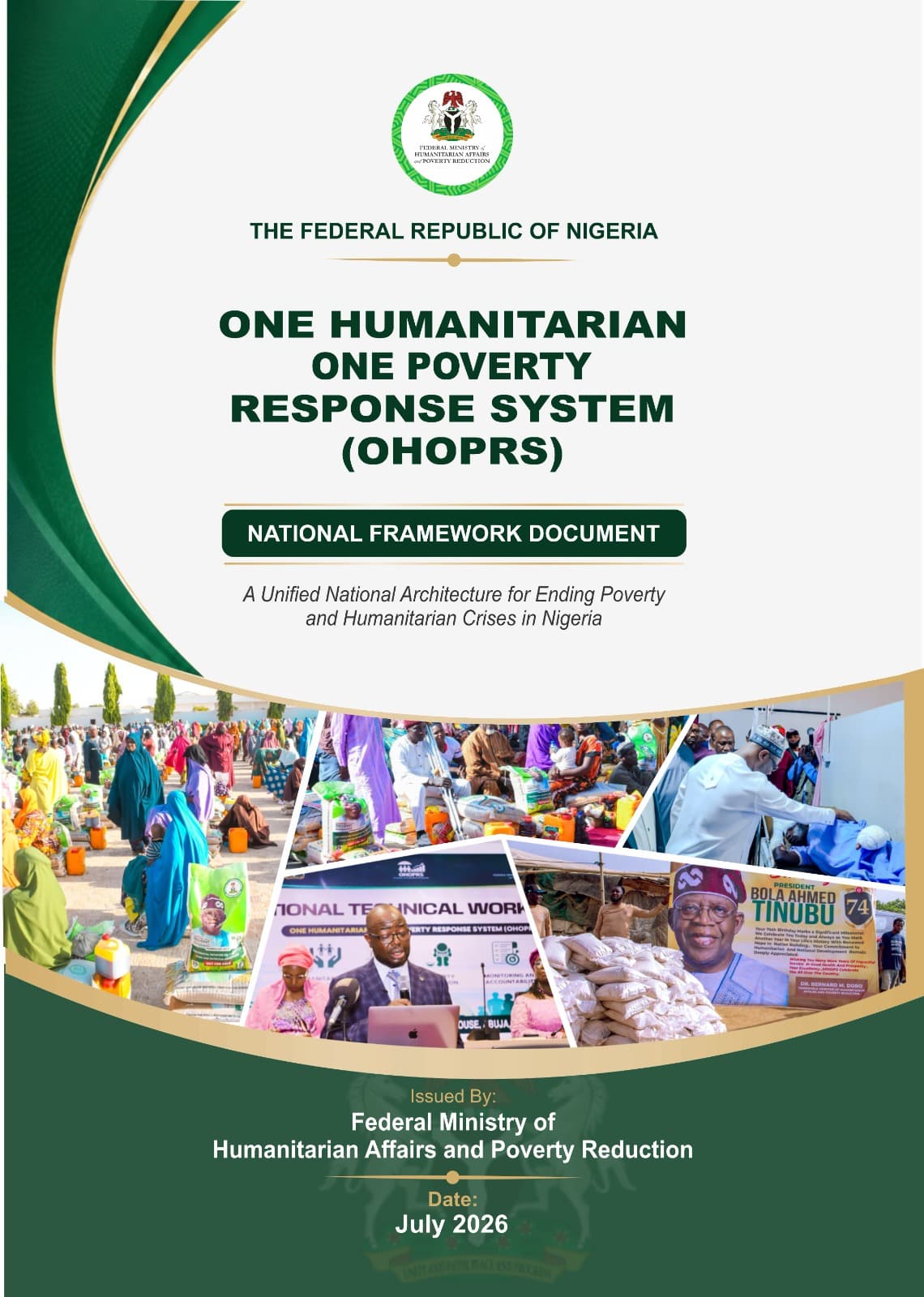
The National Framework for the One Humanitarian One Poverty Response System (OHOPRS)

National Framework

OHOPRS National Framework

The National Framework for the One Humanitarian One Poverty Response System (OHOPRS), providing the institutional framework for coordinated humanitarian action and poverty reduction in Nigeria.

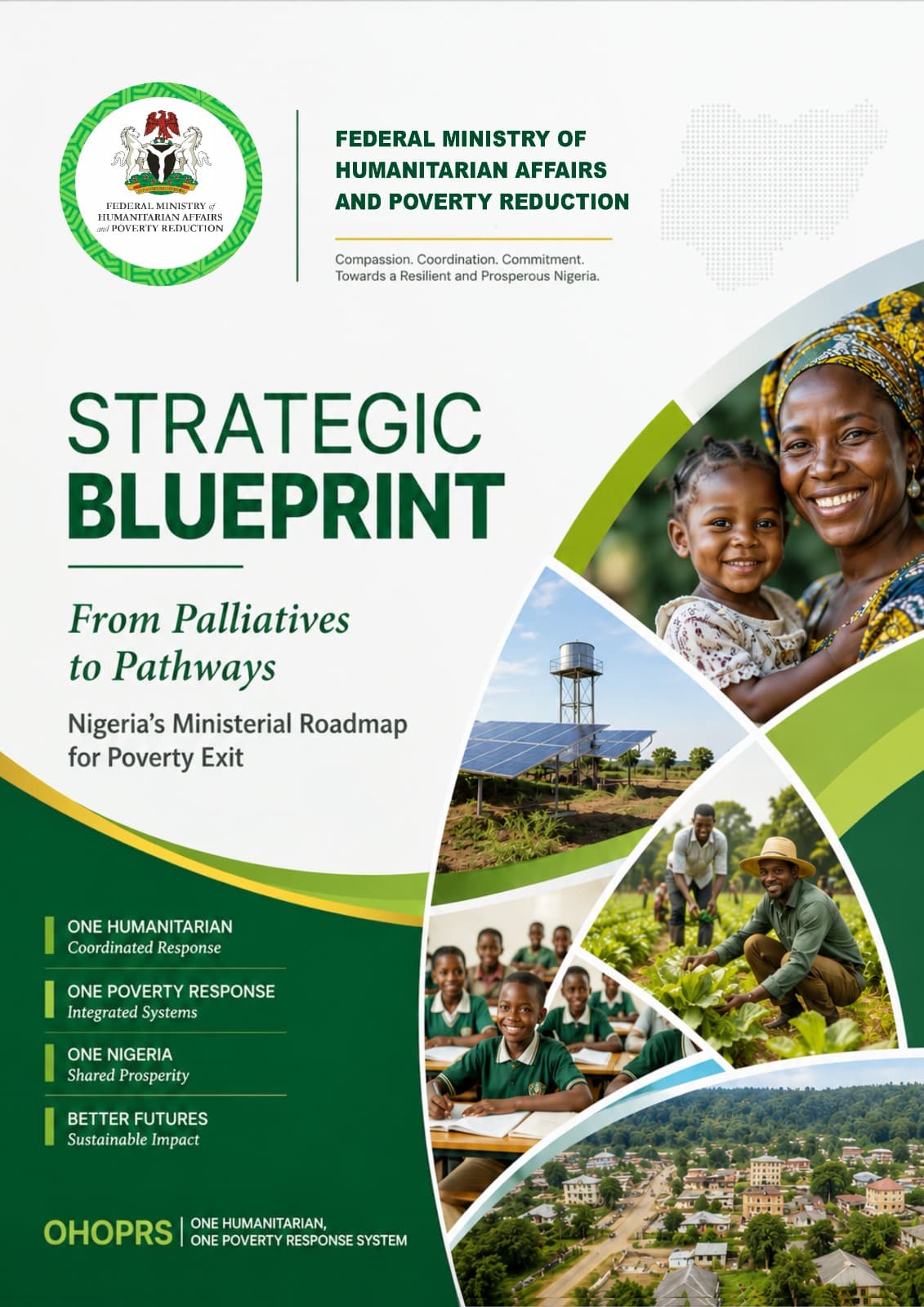
Cover of the OHOPRS Strategic Blueprint

Strategic Blueprint

OHOPRS Strategic Blueprint

The OHOPRS Strategic Blueprint provides the strategic direction for implementing the One Humanitarian One Poverty Response System, outlining the priorities, coordination approach and actions required to deliver an integrated and effective humanitarian and poverty reduction response across Nigeria.

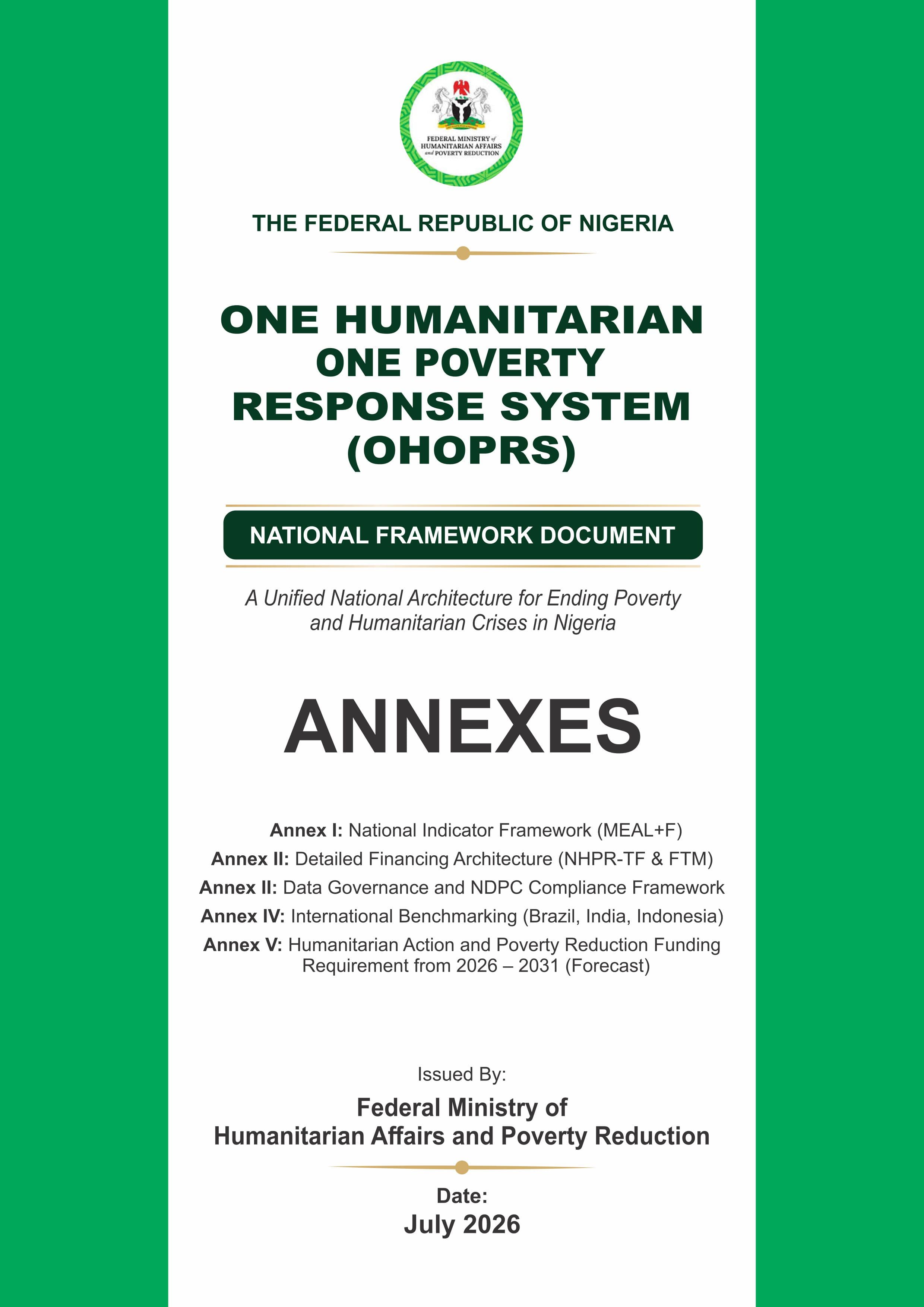
Cover of the OHOPRS Annexes

Annexes

OHOPRS Annexes

The OHOPRS Annexes provide the supporting reference materials, implementation tools and supplementary information accompanying the One Humanitarian One Poverty Response System framework and its implementation.