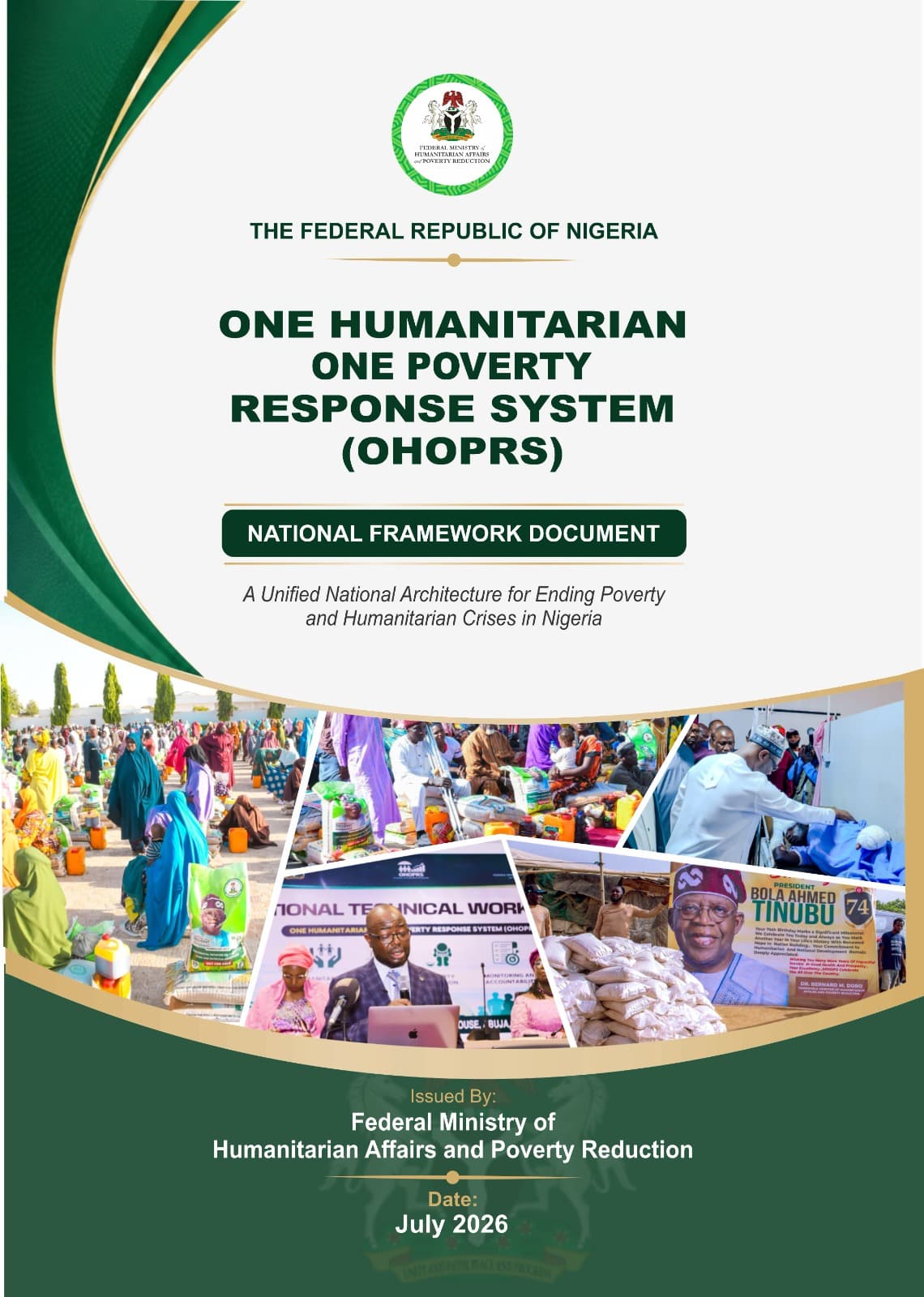
National Framework
OHOPRS National Framework
The National Framework for the One Humanitarian One Poverty Response System (OHOPRS), providing the institutional framework for coordinated humanitarian action and poverty reduction in Nigeria.
Federal Republic of Nigeria
How OHOPRS Works
OHOPRS connects identification, assessment, coordinated intervention, delivery, monitoring and evidence within one national architecture so support can be followed from need towards measurable progress.
It is an operating framework for coordination and accountability—not a claim that every intended capability is already fully implemented.
The Operating Logic
The operating journey connects a reliable understanding of need to appropriate support, continued tracking, transition and outcome measurement.
Understand who may need support and where vulnerability is present.
Establish reliable identity, eligibility and the basis for support.
Understand needs, vulnerability and the household or community context.
Link assessed needs to appropriate interventions and delivery structures.
Deliver coordinated assistance, protection, services or livelihood support.
Follow participation, delivery, changing needs and progress over time.
Support movement towards recovery, resilience and sustainable self-reliance.
Evaluate outputs, outcomes, accountability and system performance.
An Adaptive Pathway
Households may enter, move through or return to different forms of support according to need and context.
The System Behind the Journey
The National Framework links people, information, services, institutions, evidence and decisions rather than treating interventions as isolated projects.
The people, households and communities whose needs and progress anchor the response.
Identification, registration and vulnerability information establish a reliable basis for action.
Registries, monitoring and evidence support a coherent understanding of need and progress.
Appropriate interventions and services connect through an integrated delivery pathway.
Support links immediate response to recovery, economic inclusion, resilience and self-reliance.
Monitoring, evaluation, accountability, learning and feedback follow delivery and results.
Outputs, outcomes and evidence show what changed and where improvement is needed.
Evidence informs coordination, policy, planning and responsible resource decisions.
Coordinated Delivery
The levels of government connect operationally: national direction supports aligned implementation and frontline delivery, while evidence and feedback travel back into coordination and learning.
Policy, national standards, system architecture and coordination.
Alignment, oversight and integrated implementation.
Frontline delivery and local coordination.
Participation, access, feedback and outcomes.
Connected Support
The Humanitarian–Development–Peace Nexus links urgent response with recovery, livelihoods and resilience while recognising that needs are dynamic and pathways are not rigid.
Immediate needs, protection and stabilisation during crisis.
Protective and stabilising support as needs and circumstances change.
Productive capacity, services, markets and economic opportunity.
Reduced vulnerability, stronger resilience and sustainable progress.
Peacebuilding and resilience considerations help address fragility and the conditions that can keep communities vulnerable. Different forms of support may overlap or reconnect according to context.
Data & Intelligence
Data is not simply collected. It should connect identification, assessment, intervention, tracking, accountability and evidence-based decisions.
Who may need support?
What are the assessed needs?
What support is connected and delivered?
What is happening over time?
What changed and what was learned?
How should plans and responses improve?
Accountability & Learning
OHOPRS seeks to connect activity and expenditure to outputs, outcomes, feedback and institutional learning—not only to report what was done.
Set direction and intended results.
Implement the coordinated response.
Follow activities, outputs and participation.
Assess outcomes and performance.
Turn evidence and feedback into insight.
Improve plans, delivery and decisions.
The Household Journey
The institutional architecture matters because it should connect a household's immediate need to stabilisation, opportunity, resilience and sustainable self-reliance.
Recognise vulnerability and immediate needs.
Connect appropriate humanitarian or protective support.
Protect well-being and restore a basis for recovery.
Build livelihoods, services, inclusion and opportunity.
Strengthen the capacity to withstand future shocks.
Support durable dignity and economic independence.
Households may enter, move through or return to different forms of support depending on circumstances. This is an adaptable pathway, not a fixed entitlement or a one-size-fits-all sequence.
Results-Oriented Delivery
The National Indicator Framework uses a results chain that connects what is done to what changes. The public explanation below uses its formal progression from activity to impact.
What action or service was delivered?
What immediate product or service resulted?
What changed for people, institutions or communities?
Is progress contributing to durable well-being and reduced vulnerability?
Indicators and measures must be defined through the approved monitoring and results framework; this diagram does not invent programme-specific targets.
One Connected System
The complete system connects national direction to local delivery and returns evidence to planning, coordination and resource decisions.
Needs, participation and feedback
Services, pathways and progress
Outputs and outcomes inform accountability and future decisions
Go Deeper
Consult the official National Framework, Strategic Blueprint and supporting Annexes for the full institutional, implementation and results architecture.
National Framework
The National Framework for the One Humanitarian One Poverty Response System (OHOPRS), providing the institutional framework for coordinated humanitarian action and poverty reduction in Nigeria.
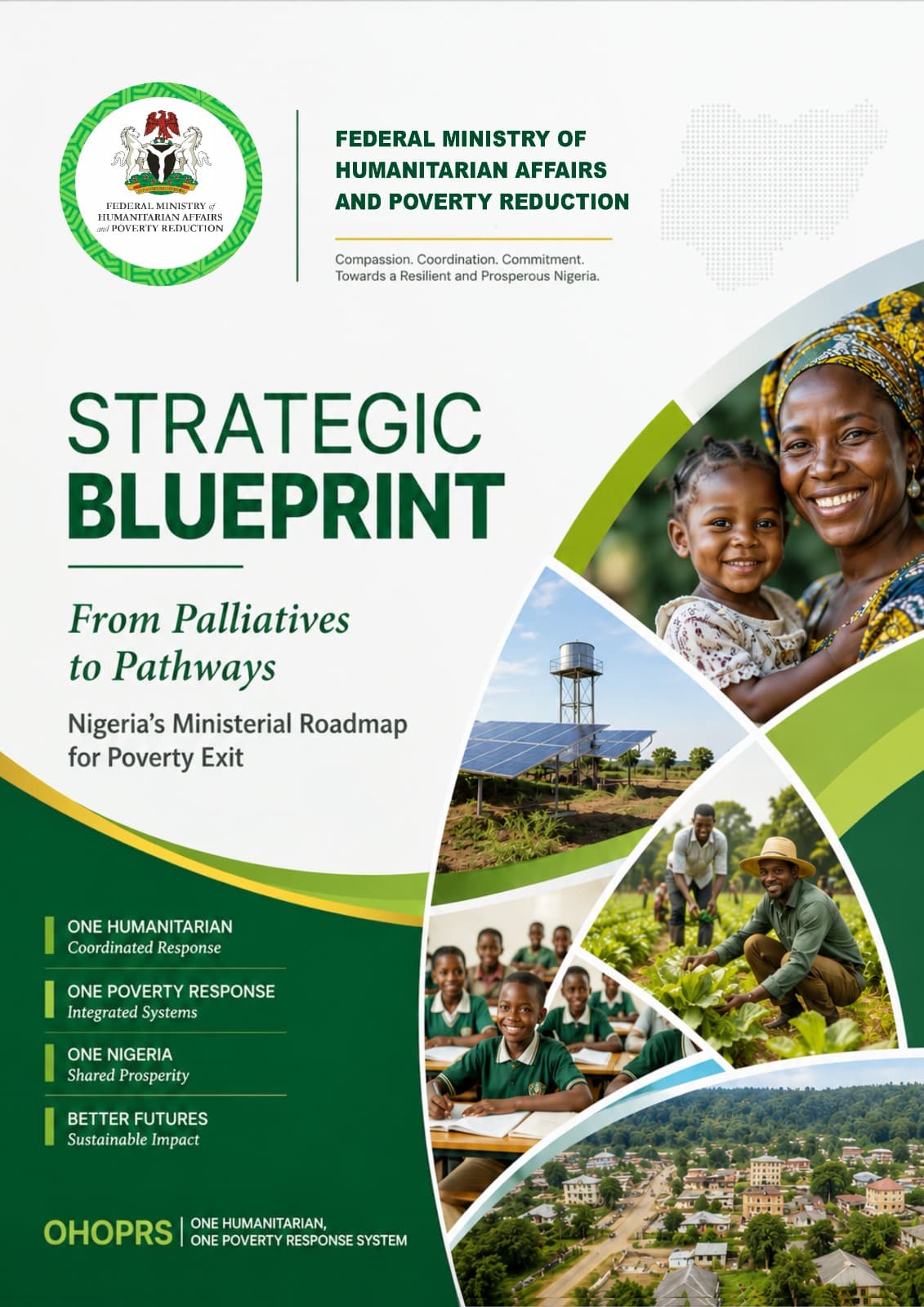
Strategic Blueprint
The OHOPRS Strategic Blueprint provides the strategic direction for implementing the One Humanitarian One Poverty Response System, outlining the priorities, coordination approach and actions required to deliver an integrated and effective humanitarian and poverty reduction response across Nigeria.
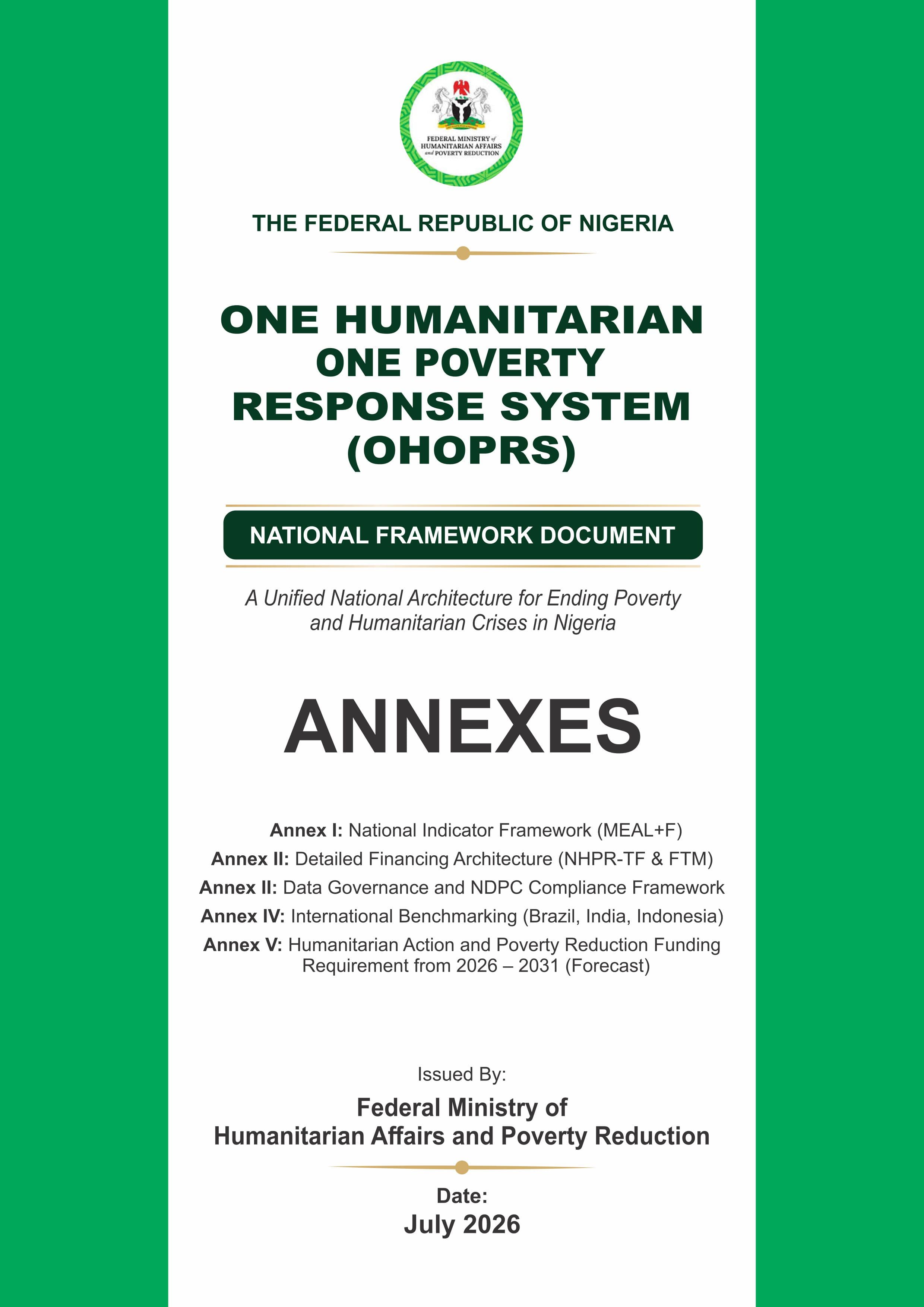
Annexes
The OHOPRS Annexes provide the supporting reference materials, implementation tools and supplementary information accompanying the One Humanitarian One Poverty Response System framework and its implementation.
Explore the official architecture for connecting humanitarian response and poverty reduction through accountable national and local delivery.